
The Columbia remains weedy and the water levels are very low. Carp fishing from the shore is a tall order, and with more saber-rattling at China over trade, I’ll be surprised if my boat arrives in time for Christmas. Luckily for me, there are other fishing opportunities around.
This week I decided to visit the Deschutes River to fish for trout. Most anglers on the Deschutes right now are searching for steelhead but I wanted to try something a little different. Each fall, many trout waters across the west see hatches of the October Caddis, a large, orange caddisfly. In an unusual manifestation of my inner fly fishing purist I decided to try to catch a trout on an October Caddis dry fly.
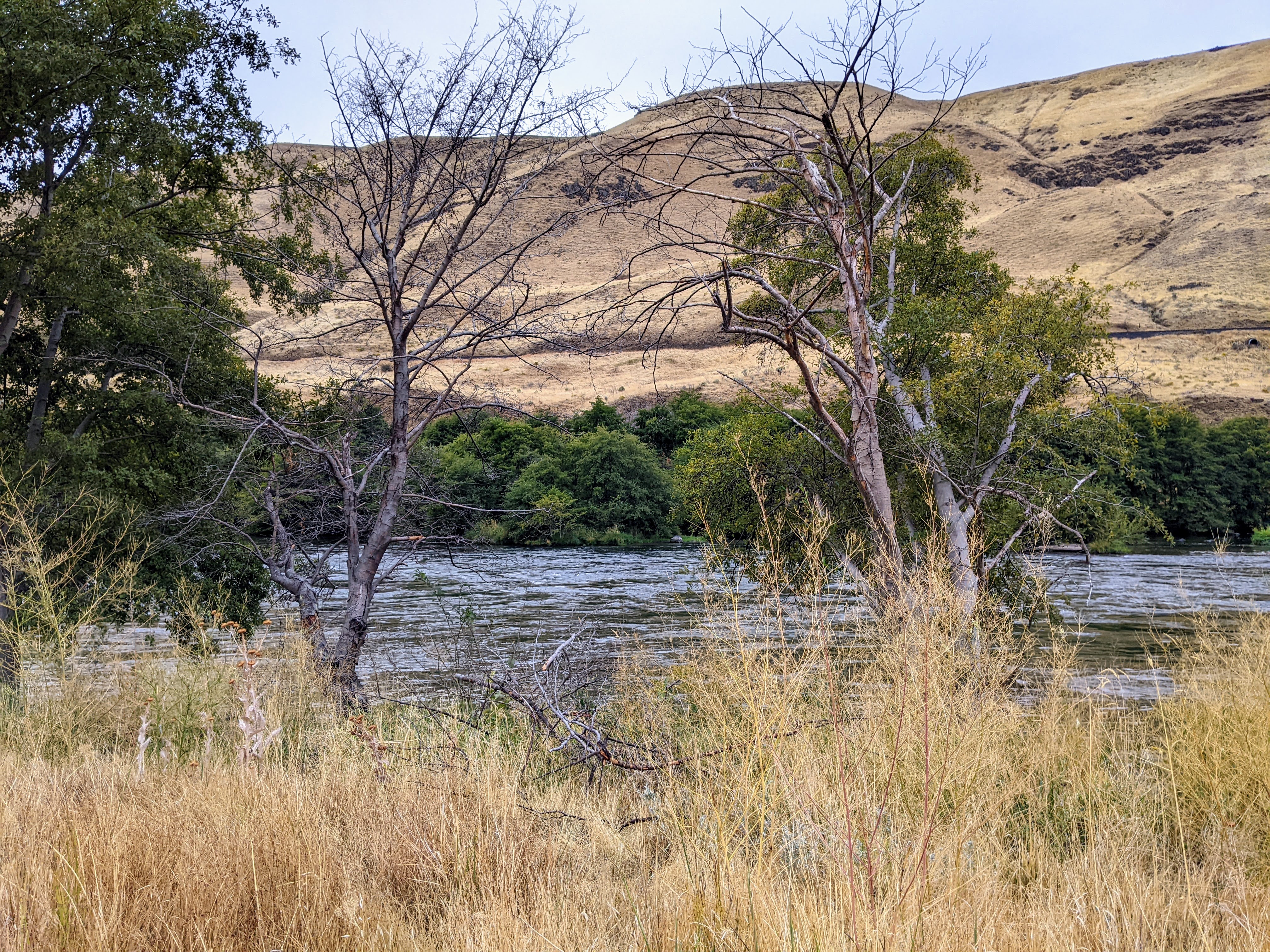
I arrived early on a brisk, weekday morning. I hiked a few miles upriver and then turned off the main trail and made my way down to the river. Whenever I approach the water, my pace naturally slows and I unconsciously lower my volume. It is the same feeling I have when I enter a cathedral, or a library, a sort of hushed reverence. I sat quietly on the bank for a while, then walked upriver, then downriver, then further downriver. By lunchtime I had seen exactly one October Caddisfly and one trout rise. The October Caddis plan was not unfolding well.
I had noticed several flocks of small birds, swallows perhaps. They were up high over the river and clearly feeding on insects too small for me to see. By the time I stopped to eat lunch, the birds had moved lower, and grown in number. Now there were hundreds of them, darting and swooping low over the water. I still was not certain what they were feasting on, but I began to hope that such an abundance of insects might induce the trout to begin rising.

As the avian feeding frenzy petered off, I saw what they had been eating. Now I am no trout nerd, but even I could tell they were not October Caddis! Spent mayflies littered the surface of the water – much smaller, and much less orange than the handful of flies I had with me. But sure enough the trout began to feed. They rose here and there, and not with great frequency, but they had certainly noticed the buffet of food drifting downstream.
From the bank I spotted one sizable fish that was rising with regularity. I watched the dorsal fin arc through the water, followed by a glimpse of tail, as it fed in classic trout fashion. It was within range, but the cast was tricky. Multiple times I had to stop and free my fly from a stalk of grass or the branch of a bush with whispered curses. My only hope was that, despite the mayfly bonanza, the trout would recognize the October caddis and decide it wanted some variety in its meal. I had no luck with the first pattern, so I changed to a slightly different fly, and moved a dozen feet upstream for a different presentation. The fish rose again. I waited a moment for it to settle, but as quickly as I dared I dropped my big, orange, October Caddis onto the water. Immediately, I saw the dark line of its back as the trout rose and took my fly. I raised my rod and felt the weight of it, but in my surprise I had been too hasty, and my line went slack as I pulled the fly from the trout’s maw. The trout was undoubtedly more surprised than I, for I did not see it rise again.
 The Fishing Dojo