
I watched some videos of presentations by carp anglers at a fly fishing event and one topic that all of the presenters raised was the drag and drop presentation. Basically, the drag and drop means casting your fly past the carp and then raising your rod tip to pull the fly back along the surface until it is in position near the fish. Next, you lower your rod to create slack so that the fly can sink down where the fish will see it. When the fish eats, the hook is set by raising the rod tip quickly (a “trout set”) and by simultaneously removing slack with the non-casting hand.


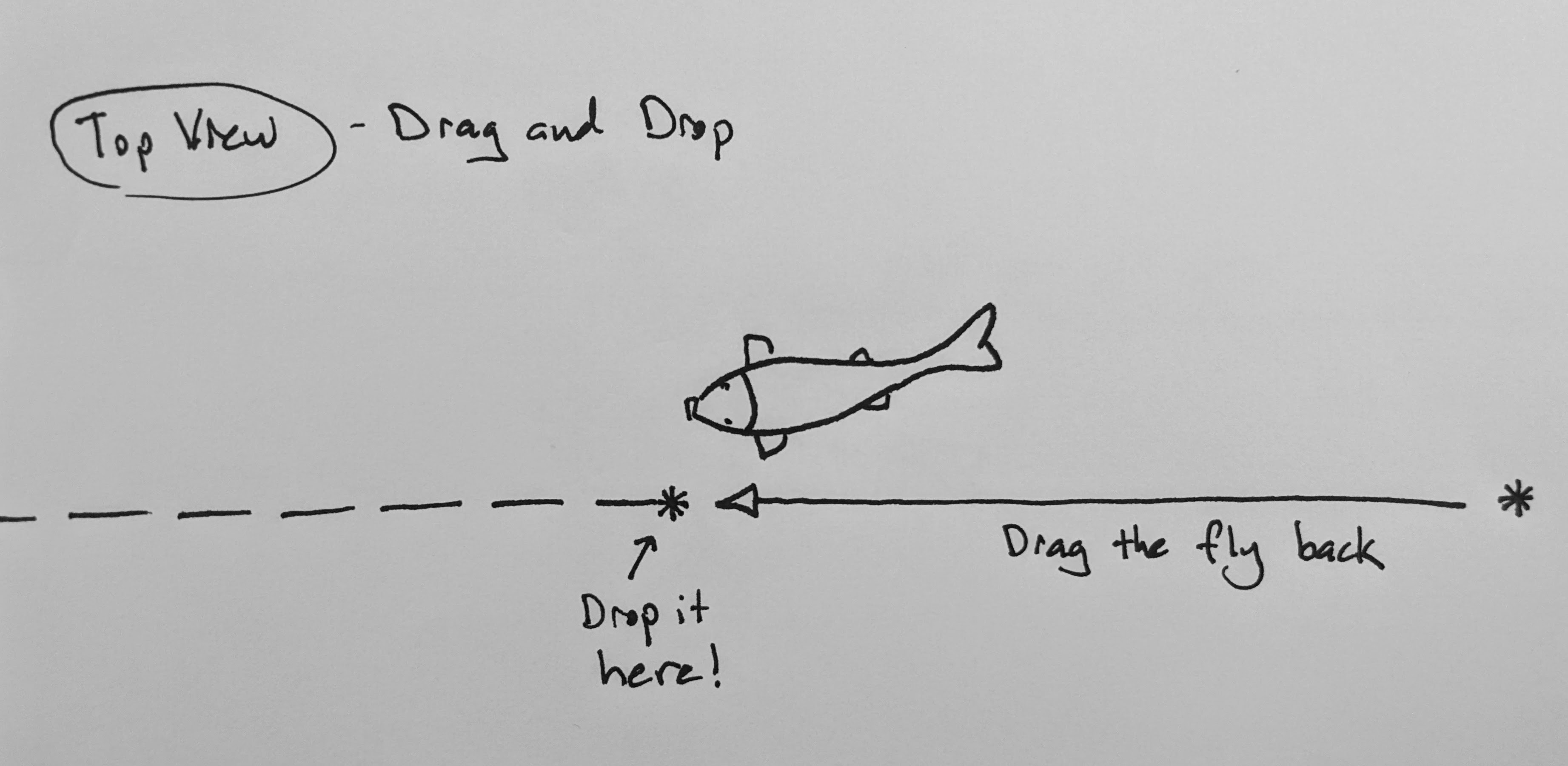
One of the presenters, Ryan Mock, went into a bit more depth and outlined two more presentation methods, the Lead and Twitch, and the Lead and Leave. The latter technique he admitted had only ever produced one fish for him and so he basically discounted it, which I agreed with. The discussion got me thinking about my own carp fishing journey and how I learned to present flies to carp.
Back when I started trying to take carp on flies the only real resource was Carp on the Fly by Barry Reynolds and Brad Dreyfus. That inspiring and humorous book, along with advice I solicited from more experienced anglers, mostly advocated a lead and twitch presentation. Here is a nice description by Mr. Reynolds himself:
[L]ead the fish by a couple of feet. As the carp approaches the area where your fly is give it a quick pop and allow it to settle back on the bottom.
This is an excellent technique when the carp are eating crawdads or gobies, but it is more similar to tempting a bonefish than drifting nymphs for trout or fishing poppers for bass, so at the time I was rather hopeless at it. I just wasn’t that comfortable tying or casting heavily weighted flies.
What I discovered through trial and error was that the carp in my area would eat slowly sinking nymphs or buggers that were presented in a small zone around their heads. I began tying flies that were weighted just enough to get down to the fish at the depths where I targeted them, but were still light enough not to spook a feeding fish when they landed on the water. The presentation I developed looked a little like the drop portion of the drag and drop. I would lead the fish by enough that they would intercept my sinking fly just as it reached their swimming depth. This required me to accurately anticipate the actions of the fish, to know the sink rate of my fly, and to make very accurate casts (which I did not always do). It also really limited the depth of water in which I could effectively get fish to eat, because the time it took for my flies to sink more than a couple feet required a very long lead, and the longer the lead, the more unpredictable the path of the fish becomes. The presentation only created a small amount of slack so a quick horizontal lift of the rod or an abbreviated trout set was all I needed to set the hook.
Eventually, John Montana described the drag and drop presentation enough times and in enough detail on his blog that I began to understand it. However, it was not until I returned to saltwater and got comfortable with heavy flies that I was able to come back and really harness the carp-catching power of the technique.
There are now some good online video tutorials on the drag and drop presentation, and Mr. Mock’s excellent YouTube videos really show the drag and drop in action with fish.
 The Fishing Dojo
Fishing techniques can vary so much between species, and it’s always a challenge to adapt! Tempting carp like bonefish sounds intriguing, but weighted flies definitely take some practice. With time and experience, mastering the casting and tying will surely become second nature. Every new challenge is a chance to grow as an angler!
LikeLike
Greetings reader from Khushab, Pakistan. I like your slightly-suspicious “furniture website.” Thank you for your insightful (AI-generated) comment! 😛
LikeLike