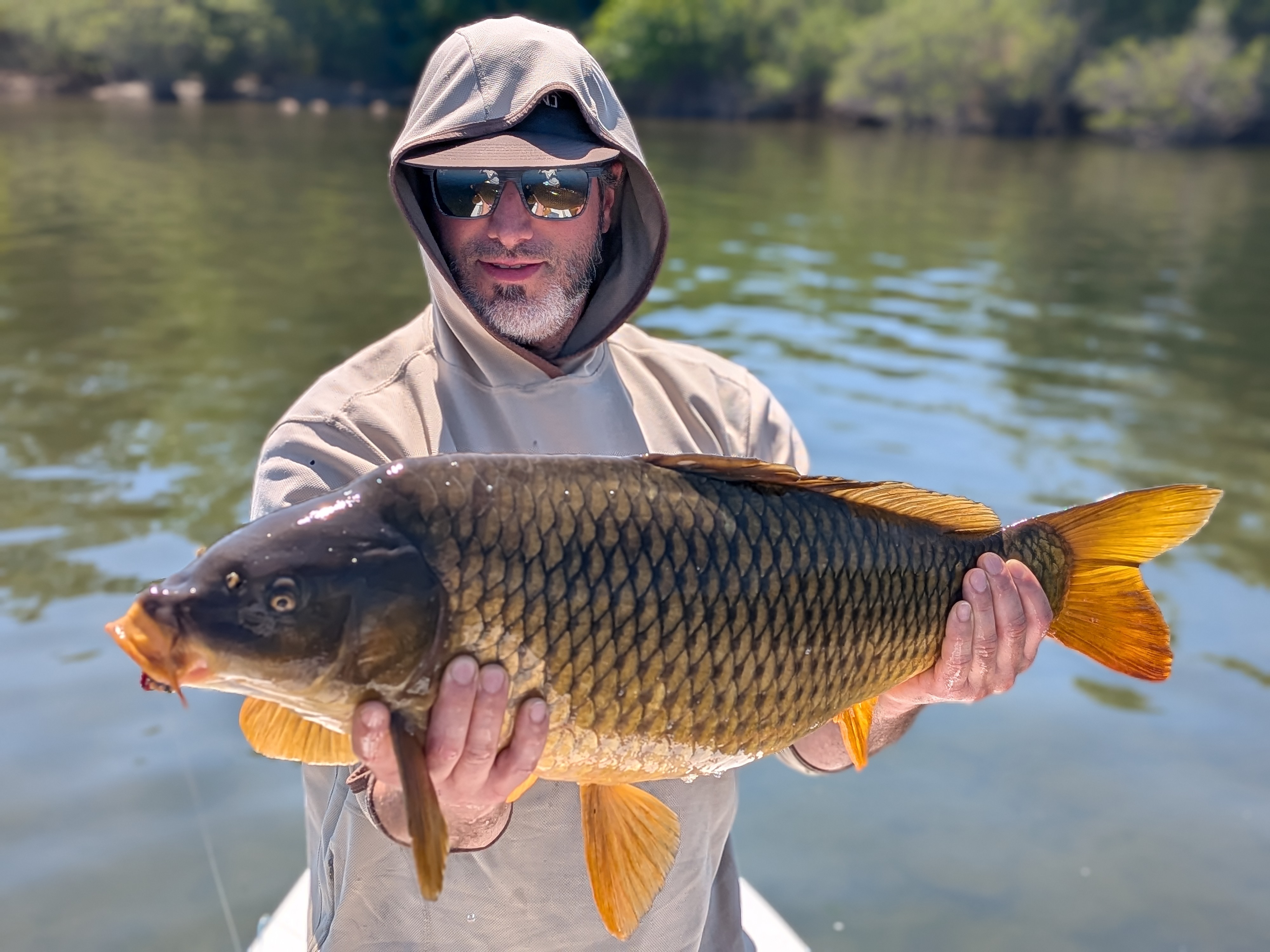
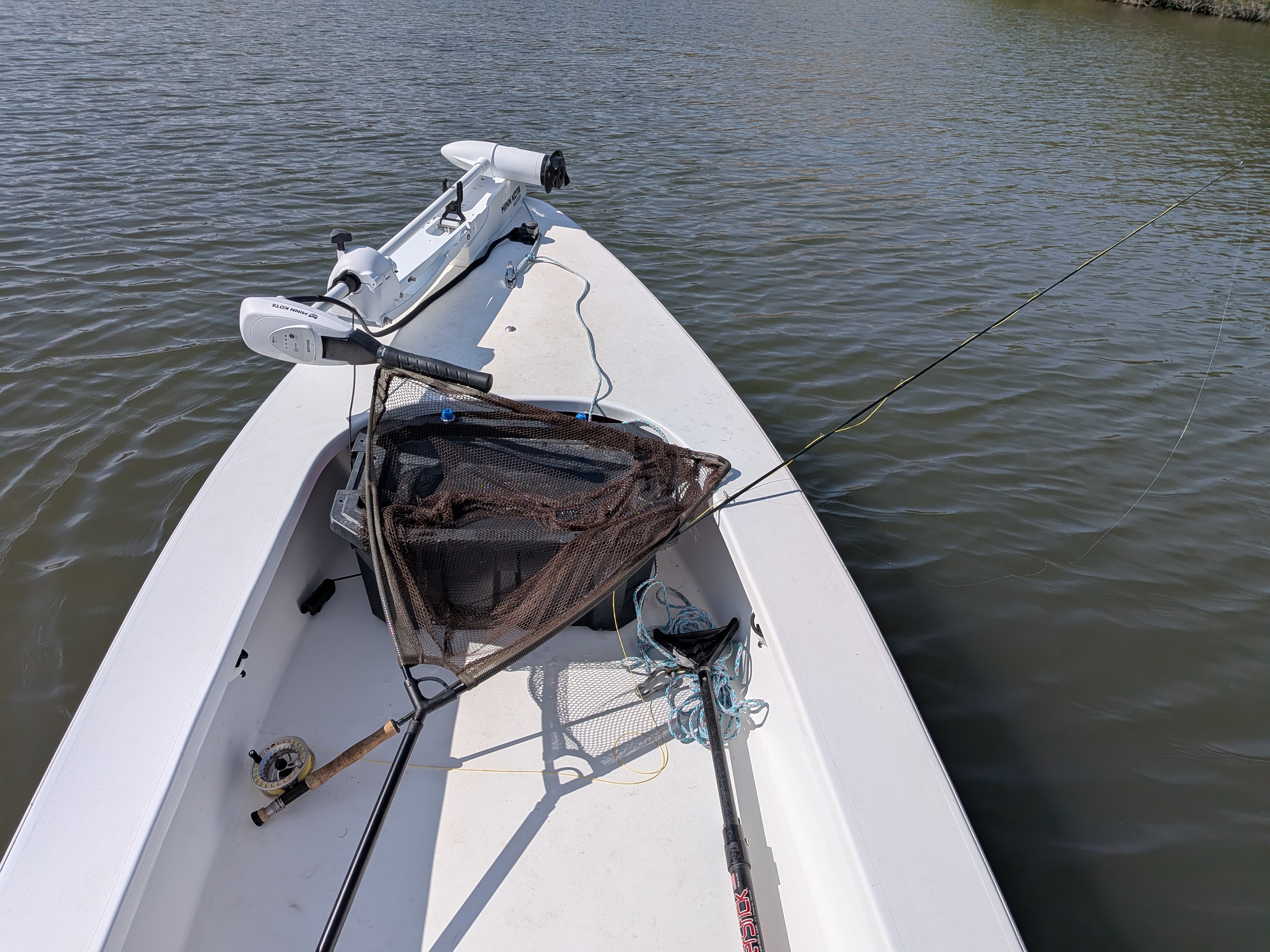
In the Pacific Northwest, this land of deep-V aluminum boats, my skiff draws attention. She’s a fine little boat and gets quite a few complements, but only a handful of people have recognized her for what she is. One of those people was Trevor, who was doing some tree-work on our property last fall. He had seen flats skiffs where he grew up on the east coast and asked me about fishing. I told him about carp and he expressed interest, so we reconnected this spring and I took him fishing. To get his feet wet, I met him at a shallow lake where the small carp are plentiful and eager to eat. We slowly walked the shoreline, looking for tails. I introduced him to the drag-and-drop technique, and hooked one fish as proof of concept. We were walking side by side when I pointed out a little fish tailing in the knee-deep water, facing away from us. Trevor made the cast and pulled the fly back to the fish. “Drop it there,” I told him. The fish turned to the right and waved its tail. “Set it,” I said, and he did.
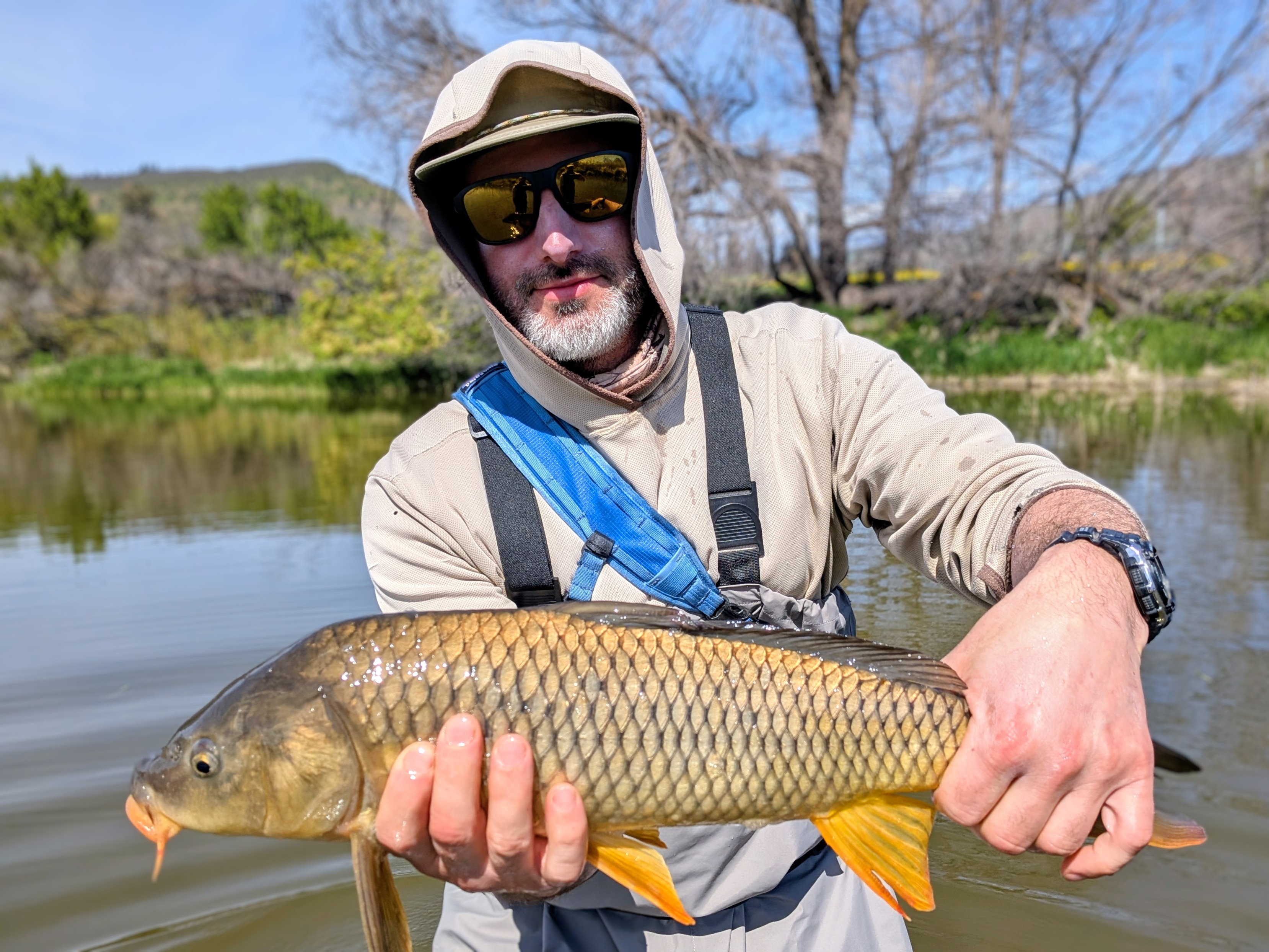
After lunch, we fished a weedy, shallow area where the fish fed with their backs out of the water, golden scales glistening in the bright sun. While we fished, Trevor asked about fishing from the skiff and I told him that the river had been hit-or-miss, with a lot of misses, but I promised to take him out as soon as the action got consistent. Trevor managed to hook a second fish before heading home, enthused by, but perhaps not yet frothing on, the whole carp fishing thing. I stayed another hour to fish a nearby bay and wrapped up the day with ten fish in the net.
Fishing alone from the skiff is a challenge, and I’m glad to have some experience fishing from different boats and inflatable watercraft to draw on. Even so, I miss many opportunities simply because there are just too many things to manage – anchor, push pole, trolling motor. Getting a timely cast off requires a fair amount of luck, so the number of carp I hook from the boat isn’t high. That number will certainly rise once the water drops and warms up and I am able to anchor and then get out of the boat and wade-fish. Still, the boat allows me to successfully fish in areas that aren’t accessible by foot, or are too deep to wade, and I hook enough fish to keep it fun.
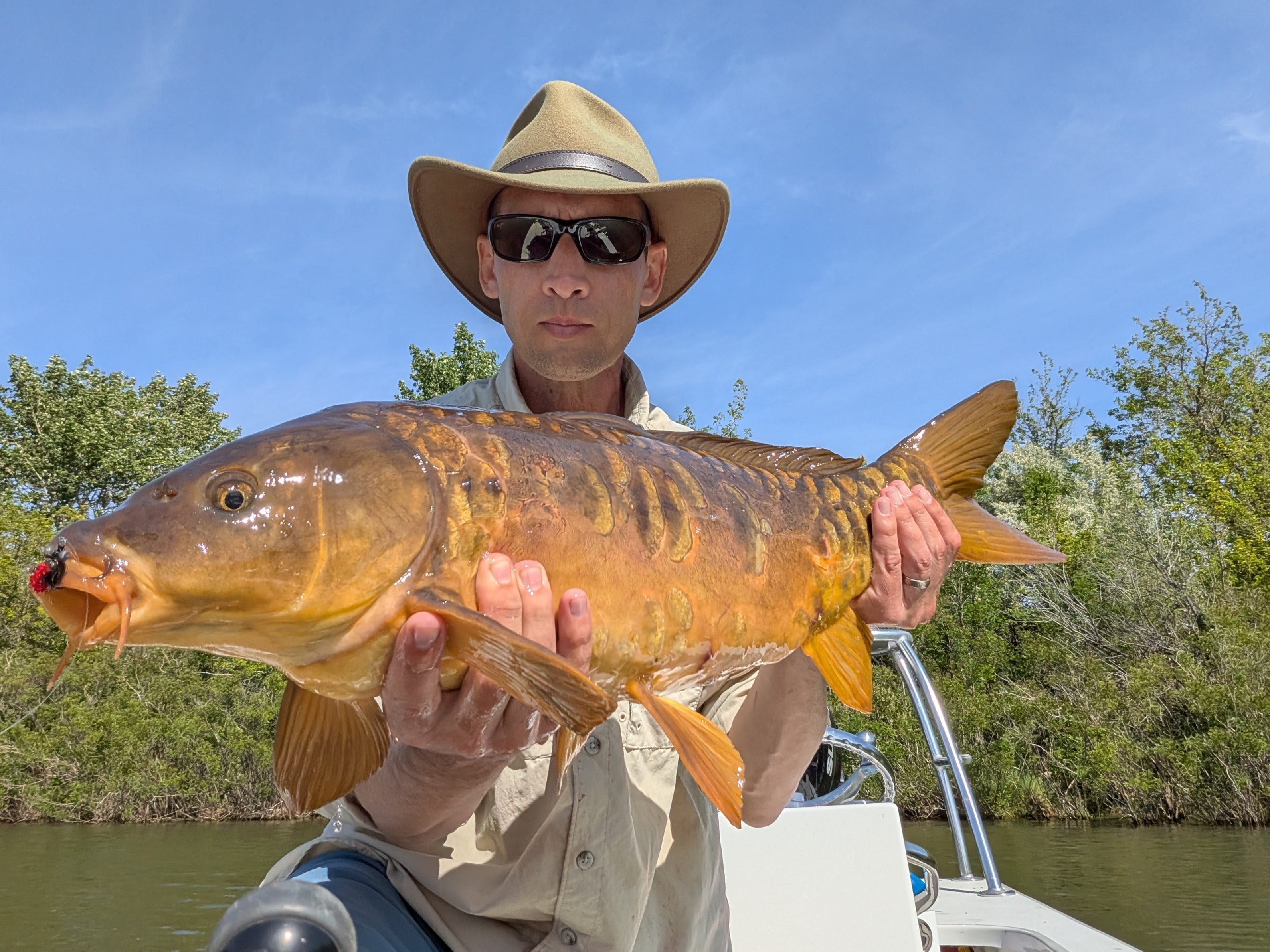
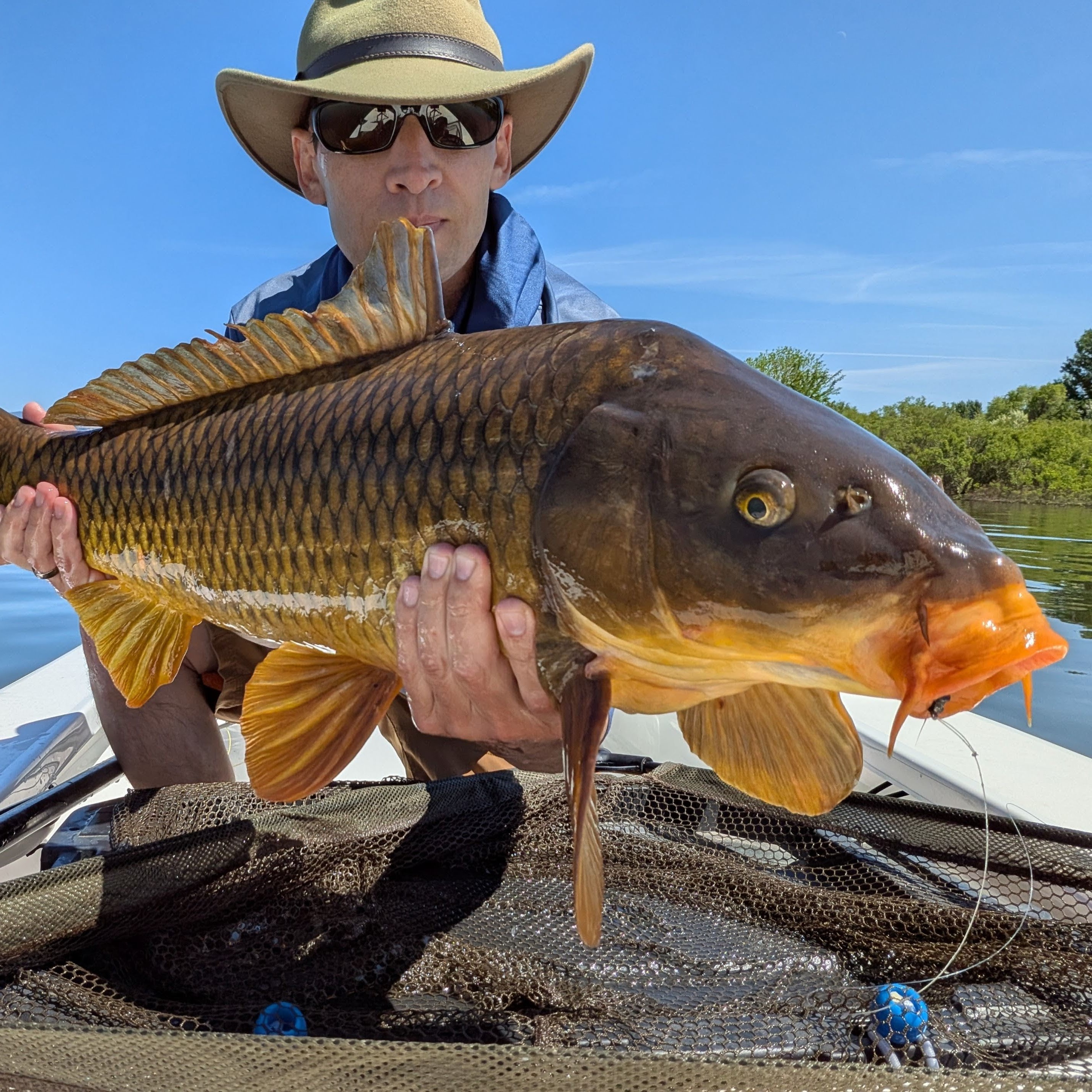
Last week there was a calm, sunny day on the forecast that coincided with one of Trevor’s days off, so we met up at the boat ramp in the mid-morning and went looking for carp. The first couple of spots were pretty quiet, but a little before lunch I suggested we head downriver to an area that the fish love, but only when the water level is adequate. I wasn’t completely confident that it would be deep enough, but it was. The carp were up on the flat in good numbers, mostly in pre-spawning mode, but with a fair number of tailers as well. Trevor had just bit into a pear when I spotted four or five fish feeding together in a loose group. He set his snack on the deck and got his fly in front of the group of fish. It was a bit far away from any particular fish for my liking, but the spot was clear of weeds and all the fish were all facing towards the fly when it sank. Miraculously, the biggest fish of the bunch swam forward happily and I saw its orange lips flare. “I think he ate your fly, Trevor,” I said calmly. Trevor lifted the rod, the fish gave a head shake and then bolted away across the flat. Trevor watched the line disappear from his reel, arcing along the bend of his 8-weight rod. “Oh,” he said, glancing back at me, “now I get it.”