
Someone stopped on the dock yesterday to ask about my skiff and what type of fishing I did. We did not have long to chat because he was waiting for another boat to pull in and pick him up, but he did mention that he was interested in getting into fishing, and fly fishing in particular. On the off chance that he actually takes a look at my website, and that I get this post published before he does, I thought I would write a little bit of advice for anyone interested in starting to fly fish. The best and easiest way is to make friends with a fly angler. They usually have tackle to lend and are happy to share their knowledge. If you don’t know anyone who fly fishes, the task can be a bit more daunting.
Fly shops have come a long way from the good ol’ boys clubs they used to be and are now generally accessible and inviting places. Most outfitters will spend an extraordinary amount of time helping someone learn the basics of fly fishing, and frequently offer introductory fly casting or fishing classes. Of course, all of this is done with the expectation that the new angler will purchase name-brand equipment from said shop. I suspect there are quite a few people who are interested in fly fishing but are on a budget that doesn’t allow for this option. So for those who are curious, but aren’t ready to spend a thousand bucks on a hobby that might not stick, here is some advice:
Prioritize Catching Fish
The goal of fishing is to catch fish. Catching fish is the most fun part of the whole experience, and it is what sets fishing apart from other outdoor activities, like hiking or biking. With time, most anglers find a niche challenge that interests them, a certain species they want to catch, a particular body of water they love to fish. For the beginner, I would strongly advise not getting sucked into your local fishing culture right away, because the learning curve might be steep. (And expensive!) Here in the Pacific Northwest the fly fishing community is focused on salmon and steelhead, and most anglers use specialized rods that in turn require specialized casting techniques. To avoid getting overwhelmed and discouraged at the outset, keep your focus on maximizing your chances of actually catching fish.
Start with Sunfishes
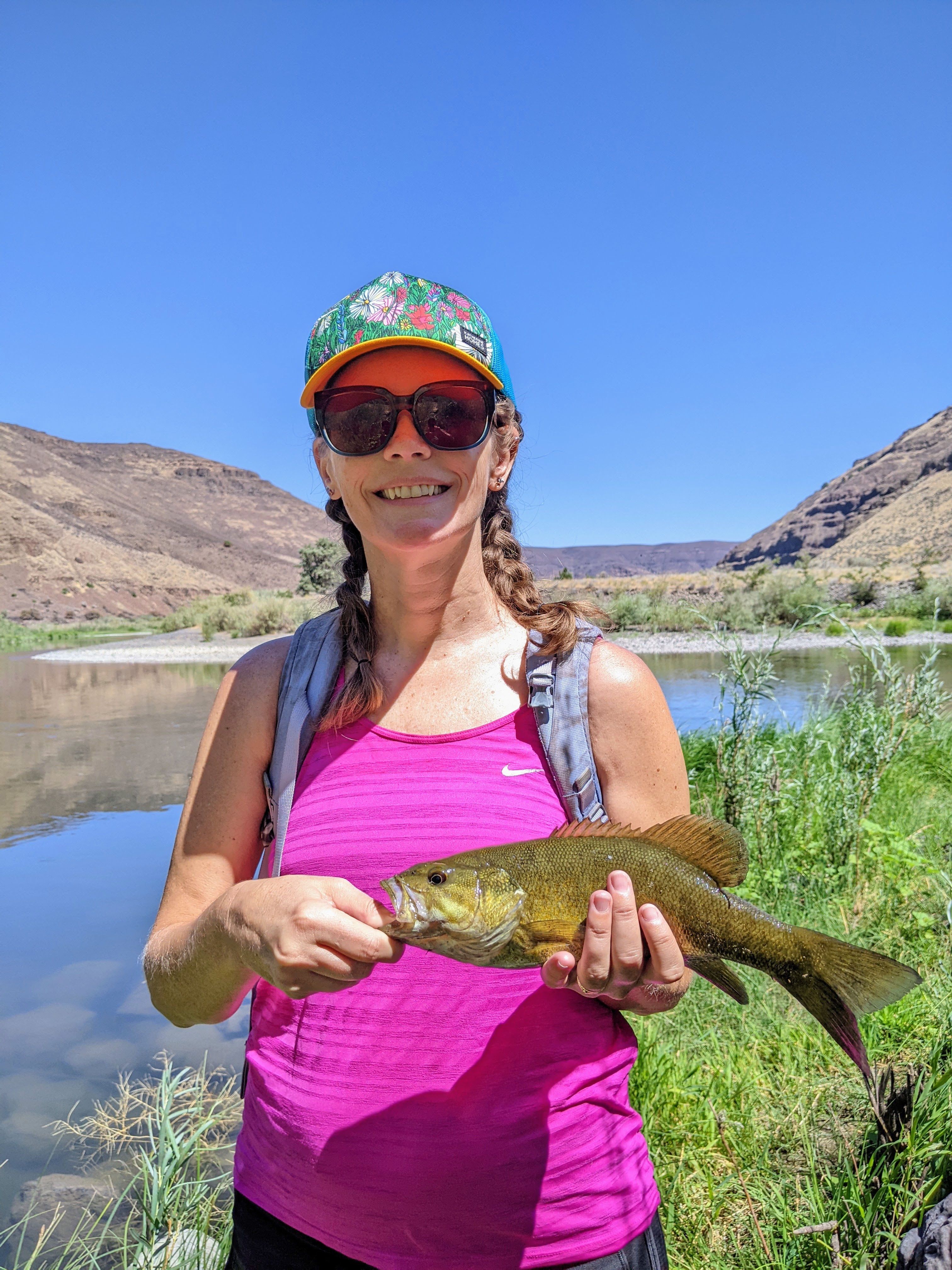
Fly fishing is practically synonymous with trout, thanks in no small part to Brad Pitt, that handsome devil, but I think the best fish for beginners to chase are the sunfishes. The sunfish family includes the freshwater bass, like largemouth and smallmouth, and over a dozen of their smaller cousins, like bluegill, pumpkinseed, and crappies. Chances are extremely high that there is a lake, pond, stream or river near you that holds one or more of these species. Sunfish are also aggressive predators, which makes them a great target for beginners. Just get a fly in the water, let it sink for a few seconds and then pull it back towards you. Experiment with moving your fly a little bit and then pausing to let it sink for a second before twitching it again. If there are sunfish around, you will often see them following the fly, and they will frequently bite between twitches.
Small and Warm
There are a lot more small fish than big fish swimming around. Since actually catching fish is the priority at the start, it makes sense to try catching the little fish first. That means that you can start out with small, simple flies (which are cheaper and easier to cast) like size 10 woolly buggers. Once catching the small fish feels too easy, then it’s probably the right time to move on to bigger challenges.
Trout inhabit beautiful but cold water, which often requires waders to fish comfortably. A cheap pair of waders runs about $100, but a quality pair made of comfortable and breathable material is closer to $500! Sunfish, on the other hand, thrive in warm water, and bite very well during the summer months, which means you can just wear a pair of sandals or old sneakers and get your feet wet. I love bass fishing on hot, still evenings. I can stand ankle deep in the refreshing water and watch the sky turn color as I hook small bass that are coming out to hunt at dusk.
Consider Tenkara
Tenkara fishing is a simplified method of fly fishing that uses a very long, light rod, but no reel. It is perfect for targeting small bass and sunfish. There are also fewer knots to tie, and fewer things to manipulate, which really allows an angler to focus on catching fish. Learning to cast is probably the largest hurdle to getting into fly fishing. There are countless books and videos that can help, but without an actual person to learn from, it can be a frustrating obstacle. I think that tenkara is a great way to learn about the basic mechanics of fly casting, like timing, loop control, and line placement, while keeping things playful and enjoyable. Lest one is tempted to discount tenkara as too simple, I can testify that it transitions perfectly to trout streams, and does not limit one to catching small fish. I have also used tenkara techniques to catch mountain mullet, many saltwater species, and even small carp!
As always, if anyone out there ever has any questions about fishing or fly fishing, feel free to contact me at fishingdojo@outlook,com.

